
What to Pack for Gorilla Trekking in Rwanda: A Guide's List
A Rwandan guide on what to wear and carry on trek day, what the park and porters provide, and what to leave at the lodge.
The short answer
Gorilla trekking in Rwanda takes 2 to 8 hours on steep, muddy ground, so I tell every guest to pack hiking boots, gaiters, a long-sleeved shirt and long trousers, a rain jacket and garden gloves. Add a backpack, water and sunscreen. Sticks are free at the trailhead, and a porter carries your bag for about US$10 a day.
Written by Eric Sabi, Founder and RDB-licensed guide · Updated November 2026
The short list: five things to pack
Five items do most of the work on trek day. I tell every guest to bring them.
- Hiking boots
- A long-sleeved shirt and long trousers
- Gaiters
- A rain jacket
- Garden gloves
Add a backpack, sunscreen and sunglasses, and a camera if you want one. Professional photographers also bring a spare battery.
You will walk for 2 to 8 hours, and 4 to 5 hours is the average. The ground is steep, and the trek starts at 2,300 to 2,600 meters above sea level inside Volcanoes National Park. In my experience, slips, altitude and nettles are what go wrong most often. The kit is chosen to deal with those three, so every item below comes with its reason. If you are still choosing a trip, our Rwanda gorilla trekking safaris page shows the options.
This post covers the day on the mountain. Our Rwanda safari packing list covers the whole suitcase. The day itself, from pick-up to return, is in our gorilla trekking in Rwanda guide and in what happens during gorilla trekking in Rwanda.
What to wear for gorilla trekking, head to toe
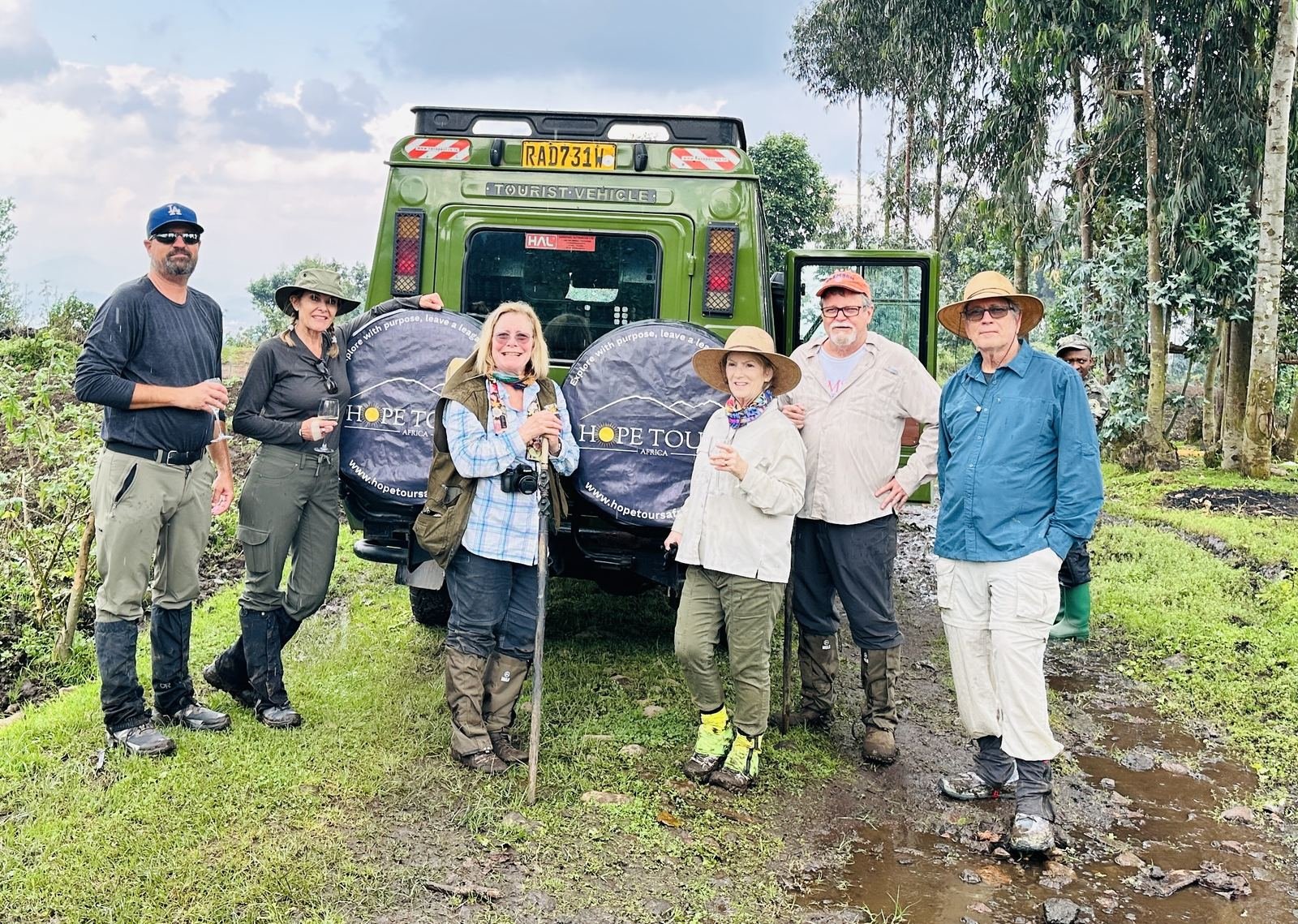
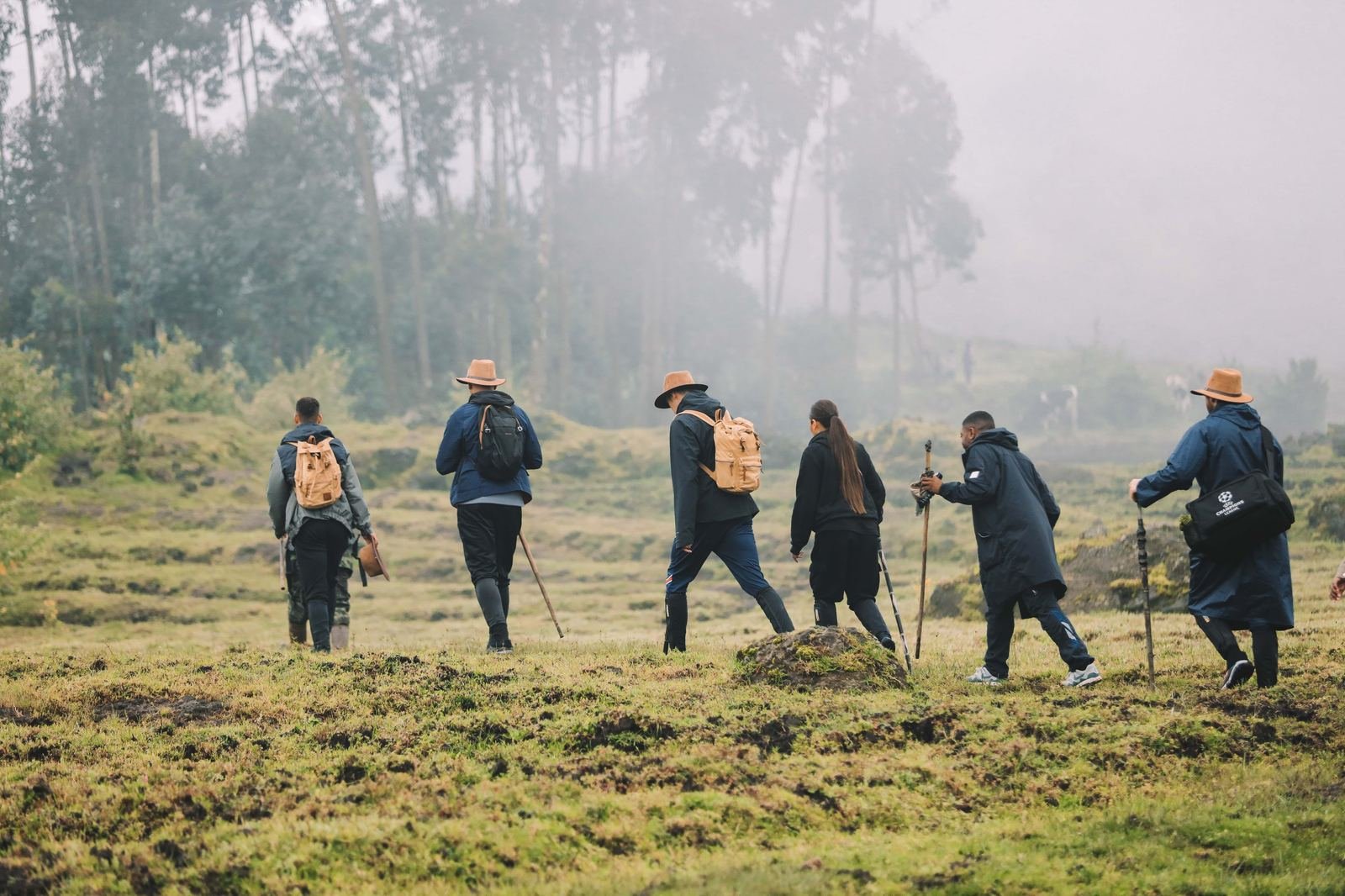
Feet. Wear hiking boots that fit you well. There is no restriction on type. The ground is steep and, in the rain, muddy and slippery, mostly on the way down. Boots can be hired at the park office in the morning, but bringing your own is better.
Legs and body. Wear long trousers and a long-sleeved shirt. They keep stinging nettles off your skin.
Layers. The start can feel cold, around 15 to 19 degrees Celsius depending on the day. Bring a warm layer and a hat, and take them off as you warm up. Your porter can carry them in your backpack. The rain jacket goes in the bag every time, because it can rain in any month.
Sun and insects. A sun hat, sunscreen and sunglasses cover the sun. Insect repellent is worth packing too.
Guests pack too much.
The most common mistake I see is packing more than the day needs. Pack for the trek, and leave the rest at the lodge.
Boots, not sneakers.
The second is running sneakers instead of boots. The mountain is steep and wet, and boots are what the day asks for.
The big lens stays behind.
I tell photographers to leave the big telephoto lens at the lodge. You stay at least 7 meters from the gorillas, and they can sometimes come closer, so there is nothing for it to do.
Read more about EricEric Sabi, Founder and RDB-licensed guide
Gaiters and gloves: the small things that matter
Gaiters. We insist on gaiters because of the nettles, ants and mud. Most luxury and mid-range lodges lend them, but not all, so bring your own if you can. If you arrive without any, they can be hired at the park office in the morning.
Garden gloves. Ordinary garden gloves protect your hands from nettles, and they also help your grip on the walking stick. Gaiters and gloves are the two items guests skip most often, and they are the two I would least like you to skip. Gloves, boots and rain jackets can also be hired at the park office in the morning, but that is a fallback.
If you have no gear. Hope Tours Africa does not lend or sell gear. If you have none, we help arrange it through hotels or partners who rent it out. Tell us when you inquire about a gorilla trek in Rwanda.
Trek-day kit at a glance
The first five rows are the essentials. The rest make the day easier.
| Item | Why you need it | Where to get it |
|---|---|---|
| Hiking boots | Steep ground, mud and slips | Bring your own; hire at the park office in the morning as a fallback |
| Long-sleeved shirt and long trousers | Stinging nettles | Bring your own |
| Gaiters | Nettles, ants and mud | Most luxury and mid-range lodges lend them; bring your own; hire at the park office |
| Rain jacket | Rain can fall in any month | Bring your own; hire at the park office |
| Garden gloves | Nettles, and a better grip on the walking stick | Bring your own; hire at the park office |
| Warm layer and hat | A cold start, around 15 to 19 degrees Celsius | Bring your own |
| Backpack with water and snack | Water, sunscreen, sunglasses, camera | Bring your own; the porter carries it |
| Walking stick | Steep ground and the descent | Free, handed out at the trailhead |
| Porter | Carries your bag and helps on steep ground | About US$10 a day, tip US$10 to US$20, optional; you pay the porter |
What goes in the backpack
Pack light. In the bag: water, a snack, sunscreen, sunglasses, insect repellent, your rain jacket, a warm layer and hat, and your camera. A spare phone battery is worth having.
Water and food. Carry at least one liter of water. We provide it in reusable bottles, because every Hope Tours Africa tour is free of single-use plastic. Most lodges give a snack for trek day, and your lodge prepares a packed lunch.
Masks. The park provides face masks, so you do not need to bring your own. You wear them with the gorillas only.
Plastic bags. Plastic bags are banned in Rwanda. At the airport, guests are asked to take their belongings out and leave the bags there. Leave plastic bags out of your luggage altogether.
The porter, the walking stick and your bag
A porter is a local community member who carries your bag and helps you across steep, muddy ground. The wage is about US$10 a day, most guests tip US$10 to US$20, and tipping is optional. You pay the porter. I recommend one in every season, not only in the rain, because porters help on the trail and hiring one supports the communities around the park.
Give the porter the whole backpack: water, snacks, hat and camera. Then walk light with your walking stick. Take the camera out when you reach the gorillas and hand it back afterwards. The camera is also safer in the bag if you fall.
The walking stick is handed out at the trailhead and is free. It helps on steep ground and on the way down, in every season. How the trail itself feels, and the other ways to make it easier, are in how difficult gorilla trekking in Rwanda is. Porter prices sit with the other extras in how much gorilla trekking in Rwanda costs and in the Rwanda safari cost guide.
Rainy season changes
Rain gear matters most in the wet months, March to May and October to November. Bring a rain jacket or poncho, and a rain cover for your camera. Rain makes the trail muddy and slippery, mostly on the way down, and guests without a porter find it much harder.
In the dry season a long-sleeved shirt may be enough, and the camera does not need a rain cover. It can still rain in any month, so the jacket stays in the bag. The best time for gorilla trekking compares the months, and is gorilla trekking in Rwanda safe covers slips and the rest.
What to leave behind
- The big telephoto lens. You stay at least 7 meters away, so it has nothing to do.
- Flash and speed lights. Neither is allowed with the gorillas.
- Plastic bags. They are banned in Rwanda.
- The rest of the suitcase. The trek needs only what is in this post.
Bring boots that fit and suit you, and save the lodge clothes for the lodge. For training and logistics before you travel, see our guide to preparing for gorilla trekking in Rwanda. If you are still deciding whether to go, read is gorilla trekking in Rwanda worth it.
If you have not booked yet, tell us your dates and we will tell you which trek and trip fit. Our 3 day gorilla trek is the simplest way to fit it in, and our 7 day luxury gorilla and chimpanzee safari, luxury Rwanda safaris and Rwanda safari packages show longer trips around it. The trips we plan around the trek are on our gorilla trekking trips page. If you have not booked yet, read how to reserve your gorilla permit first.
Gorilla trekking packing questions
More answers are in our Rwanda safari and gorilla trekking FAQs.
Yes. We insist on them because of the nettles, ants and mud. Most luxury and mid-range lodges lend gaiters, but not all, so bring your own if you can. If you have none, they can be hired at the park office in the morning. Gaiters work together with long trousers, boots and garden gloves.
Yes. Gaiters, gloves, boots and rain jackets can be hired at the park office in the morning, but bringing your own is better. Hope Tours Africa does not lend or sell gear. If you have none, we help arrange it through hotels or partners who rent it out. Tell us when you inquire.
Leave the big telephoto lens at the lodge. You stay at least 7 meters from the gorillas, and they can sometimes come closer, so a long lens has nothing to do. Flash and speed lights are not allowed with the gorillas. Bring a rain cover for the camera and, if you are a professional photographer, a spare battery.
Carry at least one liter of water, and pack only what the day needs. A porter can carry the whole backpack, so give the porter your water, snacks, hat and camera. The wage is about US$10 a day, and most guests tip US$10 to US$20, which is optional. You pay the porter.
Plastic bags are banned in Rwanda. At the airport, guests are asked to take their belongings out and leave the bags there, so leave them out of your luggage. You do not need to bring a face mask. The park provides them, and you wear one with the gorillas only.
The start can feel cold, around 15 to 19 degrees Celsius depending on the day. Bring a warm layer and a hat, and take them off as you warm up. Your porter can carry them in the backpack. The trek itself is steep, so most guests warm up quickly once they start walking.
Related guides
Three guides to read next as you decide.
Speak with a safari specialist about the trek and your fitness
Speak with a safari specialist about your trek and your kit. You can also reach us on WhatsApp, by email or on +250 788 602 524.


