What Happens During Gorilla Trekking in Rwanda: A Guide's Walkthrough
From the Kinigi park office to your hour with the gorillas: the briefing, the walk, who is with you and when you are back.
The short answer
What happens during gorilla trekking in Rwanda: you reach the Kinigi park office by 7:00 am, have your permit and passport checked, are assigned a family and briefed, then hike 2 to 8 hours in all, including one hour with the gorillas, 7 meters away. Most guests are back at their lodge by 1:00 to 3:30 pm.
Written by Eric Sabi, Founder and RDB-licensed guide · Updated November 2026
What time gorilla trekking starts: Kinigi before seven
Your day on a Rwanda gorilla trek starts at the park head office in Kinigi, on the edge of Volcanoes National Park. Most guests leave their lodge at about 6:30 am, and the park asks everyone to be there by 7:00. For the permit itself, see how to book a Rwanda gorilla trekking permit.
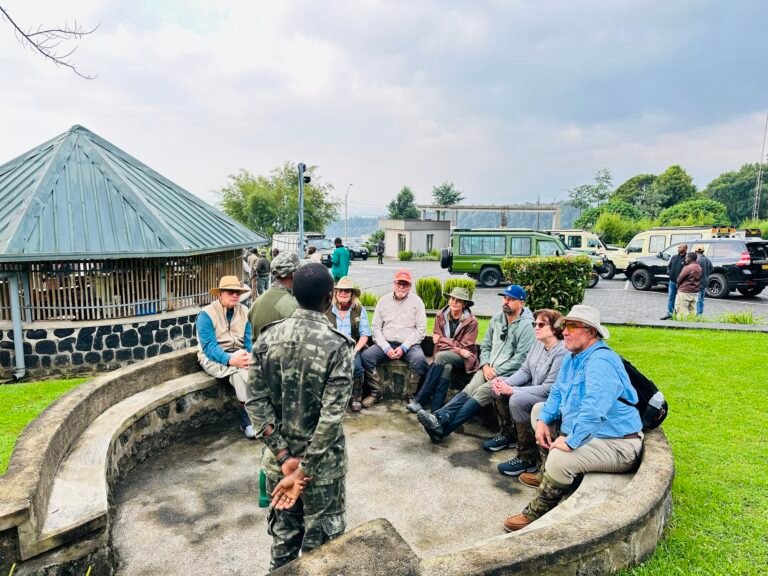
Park officials check your permit, issued by the Rwanda Development Board, against your passport first. Then they assign each group to a gorilla family. You cannot choose the family. The evening before, we send the park a form with each guest’s age, health and any special requests, and the park uses three things to decide: age, health and how many treks you are doing in a row. It does its best, and nothing is guaranteed. The full picture is in how difficult gorilla trekking in Rwanda really is.
Then comes the family briefing. The park guide tells you which family you will visit and roughly how long the trek is likely to take. We also brief our guests ourselves, before the day, on how to behave around the gorillas and what to expect. By the time you stand in Kinigi, nothing should be a surprise.
From the park office to the trailhead
Each family has its own starting point, so the drive from the park office is short or long depending on the family you were given: from 25 minutes to almost 2 hours. At the trailhead you meet the porters, if you want one. Hiring a porter is optional. You also pick up a walking stick, which is free, and hear one last briefing.
Hand the porter your whole backpack: water, snacks, hat, camera. You walk light with the stick and take the camera out when you reach the gorillas. If you want to train before you come, see how to prepare for gorilla trekking in Rwanda. If you are still choosing what to carry, see what to pack for gorilla trekking in Rwanda.
The walk in, with the trackers ahead of you
Here is something guests rarely hear. The gorillas have been found before you arrive. Trackers are the first people into the forest each day, and the last to leave it. In the evening they stay until they know where the gorillas have made their nests for the night. Next morning they head back to that area, find the family and tell the park guide where it is, by walkie-talkie or mobile phone. The guide then walks the group toward those coordinates. That is why sightings are close to certain in our experience, though never a guarantee.
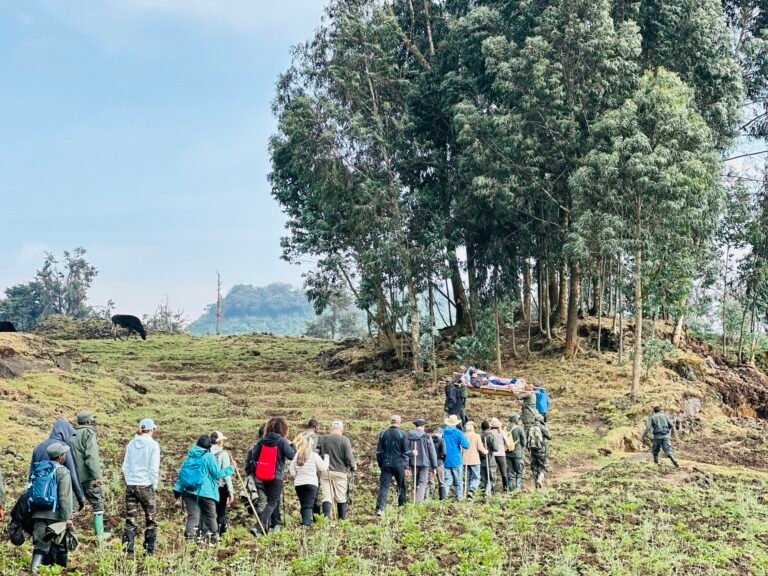
You usually do not know how close you are. The park guide keeps in touch with the trackers and tells you when you are about to arrive. The walk itself is steep in places and muddy, through stinging nettles, at 2,300 to 2,600 meters above sea level. Everyone walks at their own pace and the group stops for water and rests. Nobody is rewarded for being first.
How long the gorilla trek takes depends on where the gorillas slept and how they moved overnight: 2 to 8 hours for the whole trek, including the hour with the gorillas, with an average of 4 to 5. That excludes the drive to the trailhead. If they moved uphill, the walk is longer. If they came down toward the edge of the forest, it is shorter. Rain makes the ground slippery at any time of year, and the best time for gorilla trekking guide covers the months.
I never promise a last-minute permit.
When we find one, it is mostly from a cancellation, because we watch the cancellations closely with RDB. Some days are full and others have only a few slots.
June to September goes first.
You cannot tell in advance when a date will run out, because it depends on the demand that day.
Let the operator carry the paperwork.
It lets you focus on preparing for the trip, while we organize the permits, transport, accommodation and guides.
Read more about EricEric Sabi, Founder and RDB-licensed guide
What happens during gorilla trekking in Rwanda: the last stretch
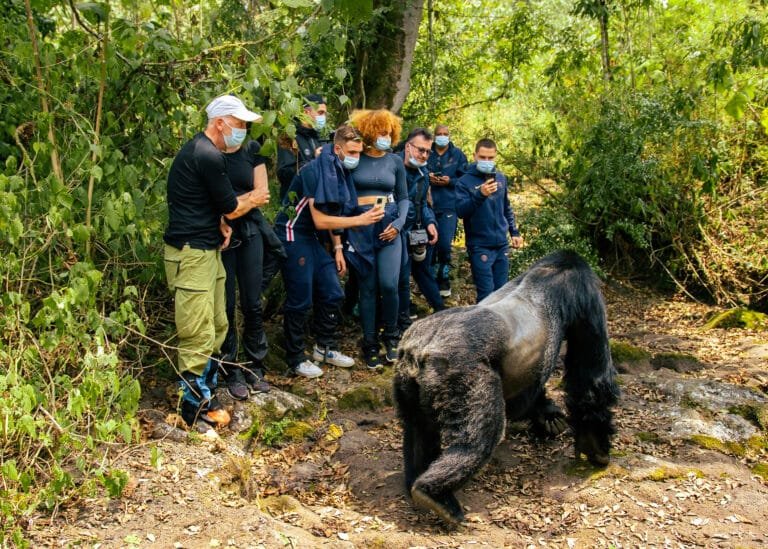
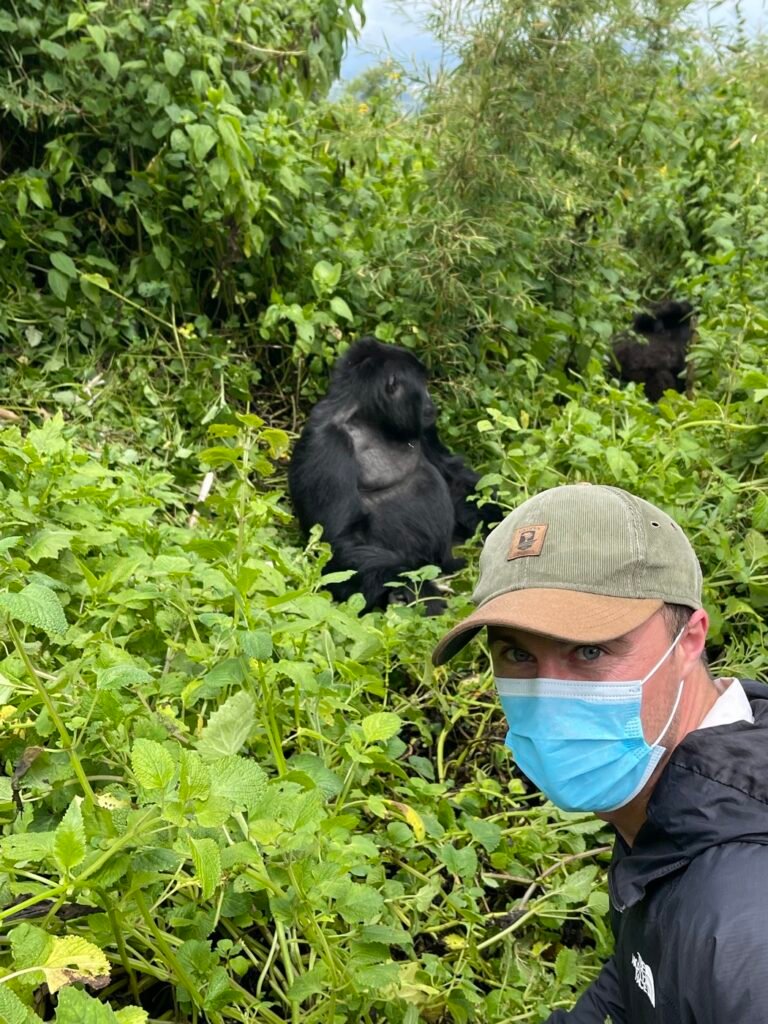
A few minutes from the gorillas, the group stops. You leave your backpack and your walking stick with the porters, and you go on with the park guide and the ranger only. The park guide hands out the face masks. You wear them from here, with the gorillas, not for the whole walk.
This is also where the park guide tells you how to behave: keep at least 7 meters away, no flash, no eating near them, and stay still if they come toward you. The gorillas are used to people, and they sometimes walk straight toward the group. If a young one touches your shoes or trousers, stay still too. The full list of rules is in gorilla trekking Rwanda rules.
The hour goes faster than you expect
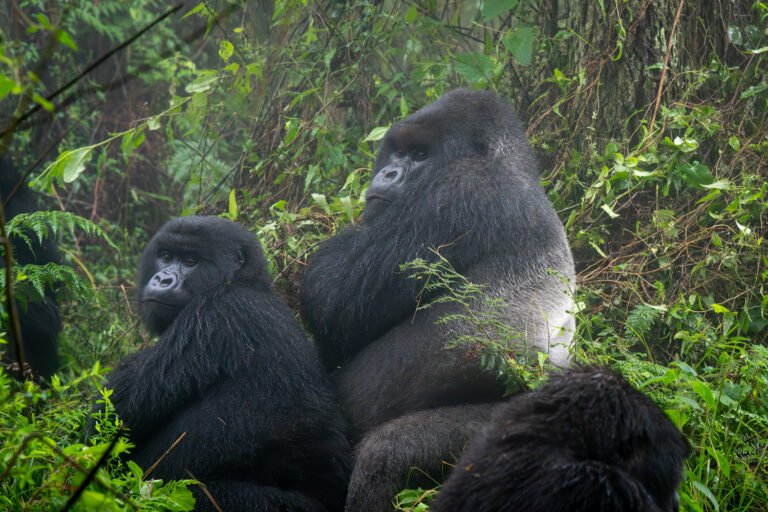
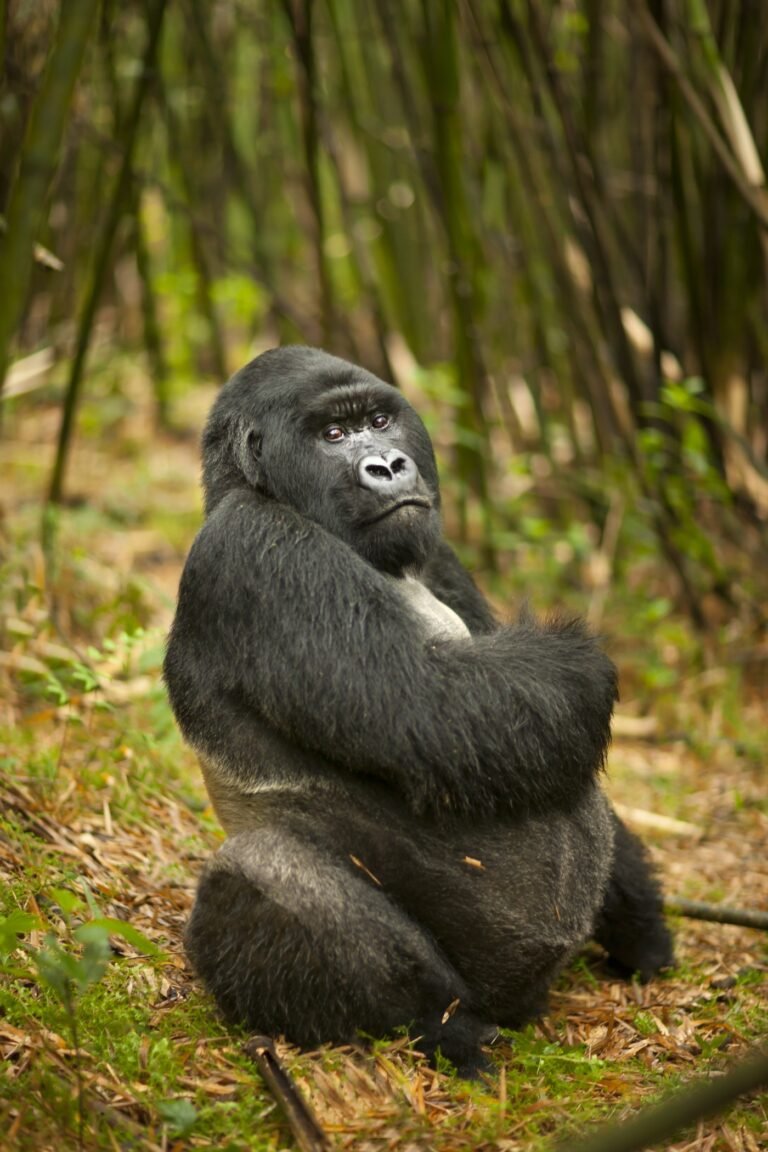
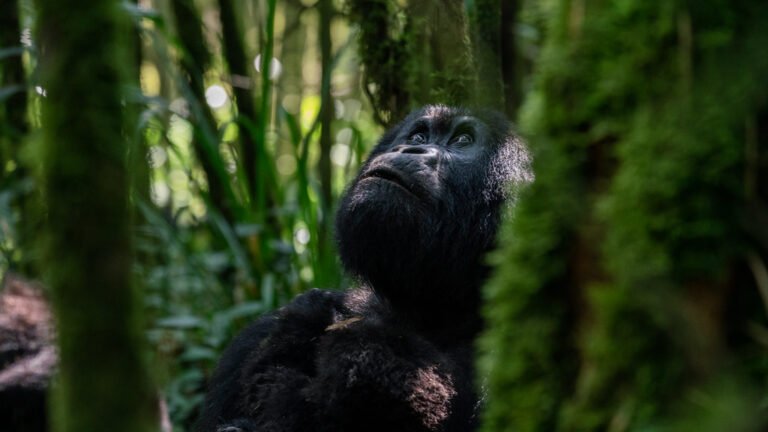
You get one hour with the gorillas, and the park guide decides when it starts and announces when it is over. Within the hour the gorillas are free to do what they like. They may be eating or resting. The babies mostly play. Sometimes the family moves on, and when it does, you follow it.
Guests tell me the same two things afterwards. The gorillas came closer than they expected, and the hour was gone before they knew it. So take your photographs, then put the camera down. You will not need a long telephoto lens, because you are only a few meters away. Leave the big lens at the lodge. No flash.
One hour is not long, and many guests say it is enough. Whether it is worth the price is a fair question, and I answer it in is gorilla trekking in Rwanda worth it. If standing for the whole hour worries you, tell us before the trek: we can arrange a portable seat with the porters. It is not guaranteed, because it depends on the terrain.
Who is with you on the trail
Tipping is never required, and guests give tips after the trek. We explain this before the day. Tips are on top of the permit: for what a trek costs in total, see how much gorilla trekking in Rwanda costs and the Rwanda safari cost guide.
| Who | Where you meet them | What they do | Usual tip (US$, optional) |
|---|---|---|---|
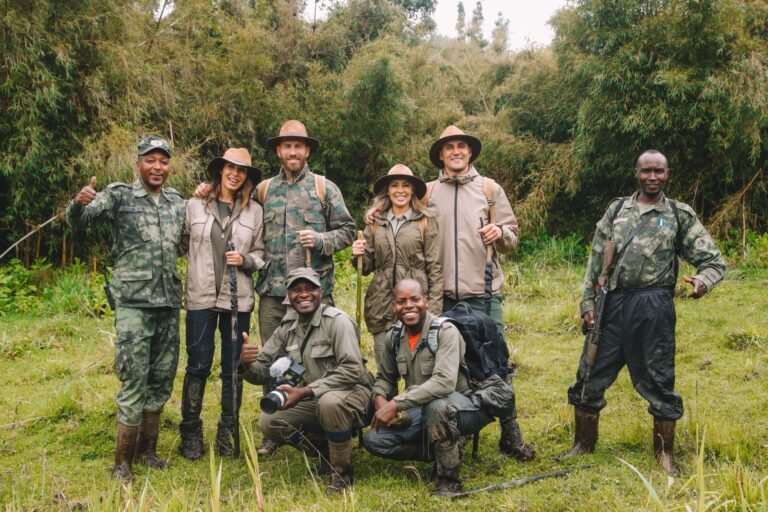
| Park guide | Kinigi park office | Gives the family briefing, leads the walk, keeps in touch with the trackers, hands out the masks, starts and ends your hour | 30 or more |
| Trackers | In the forest, ahead of you | Go in first and leave last, watch where the family nests, find it each morning and direct the guide by walkie-talkie or phone | 10 to 20 each (a team of three or four) |
| Ranger | With the group and the park guide, to the gorillas | Carries a gun to protect the team from wild buffalo and elephants, rarely used and never for the gorillas | 10 to 20 (usually tipped with the trackers) |
| Porters | The trailhead (optional) | Carry your backpack, hold your bag and stick while you are with the gorillas, help on steep and muddy ground | 10 to 20 (daily wage about 10) |
| Hope Tours Africa | Before the day, and at the park | Briefs you on how to behave, files the age and health form with the park the evening before, arranges your lodge pick-up | Not a tip: part of your trip |
Back down, and what follows
When the hour is over the park guide tells you, and you leave the gorillas. Your backpack and walking stick are waiting with the porters. Guests do not eat at the gorillas, which is why the bags stay behind. Instead, you eat your lunch box or snacks in the forest after the hour, before you start the walk down. Tips for the team come after the trek.
The park used to give trekking certificates. It no longer does, so do not expect one. What you take home is the hour and your photographs.
Most guests are back at their lodge between about 1:00 and 3:30 pm. There is no fixed finish time. It depends on the family and the weather.
When the day does not go to plan
The usual surprise is that the trek is harder than expected. I once guided a group of seven in their late seventies and eighties who had asked for the easiest group. The trek still turned out to be long, and they came out of the forest at about 5 pm. Nobody is promised a short trek.
If you are worried about tired legs, the options are a porter, a stretcher carried by a team of eight, or a portable seat for the hour. How difficult is gorilla trekking in Rwanda? explains each one. If you wake up unwell, the park advises you not to trek. There is no testing, and the permit is non-refundable, so travel insurance matters. See is gorilla trekking in Rwanda safe.
Planning the day around you
If you want to know what to expect on a gorilla trek in Rwanda and then plan the day around your pace, a longer stay near the park, or a carried trek, that is what our gorilla trekking tours and Rwanda luxury safaris are for. A 3-day trip gives you a night near the park, with no long drive and no time pressure: see the 3 Day Gorilla Trekking Rwanda itinerary. The 1-day version from Kigali is shorter on rest: see the 1 Day Gorilla Trekking Rwanda from Kigali page. For the full planning picture, see Gorilla Trekking in Rwanda.
Questions guests ask
More short answers are in our Rwanda gorilla trekking FAQs.
No. The park decides on the morning, after your permit and passport are checked, and no family is always easy or always hard. The evening before, we send the park a form with each guest’s age, health and any requests. The park uses age, health and the number of treks in a row, and nothing is guaranteed. See how to book a Rwanda gorilla trekking permit.
No. The park used to give trekking certificates but no longer does, so nothing is handed out when you finish, even though some older websites still say you receive one. What you take home is the hour with the gorillas and your own photographs. Your permit and a passport copy are the only paperwork you need on the morning.
Tell your guide. A stretcher carried by a team of eight porters costs US$200 per guest for the whole carry. Calling for it part-way is sometimes possible, but it is not guaranteed and we do not recommend it, so it is better to arrange it before the trek. A portable seat for the hour can also be arranged with the porters. See how difficult gorilla trekking in Rwanda is.
Do what the park guide tells you: step back, stand still or look away. The gorillas are used to people and sometimes walk toward the group, and the guide knows each family. In my years guiding I have never heard of a gorilla hurting a visitor. The ranger who walks with you carries a gun for buffalo and elephants, not for gorillas. See is gorilla trekking in Rwanda safe.
Tipping is never required, and guests give tips after the trek. We explain this before the day. Guests usually give the park guide US$30 or more, and each tracker and the ranger US$10 to US$20. A porter earns about US$10 a day, and most guests tip a porter US$10 to US$20.
The park advises you not to trek if you feel unwell. There is no testing, and a mild cold can be managed with a mask. The permit is non-refundable if you do not trek, so travel insurance is worth having. A guest who is unwell can take medication and still trek, or hire the stretcher. See how to book a Rwanda gorilla trekking permit.
Related guides
Three guides to read next: how hard the walk is, how to book the permit and what to pack.
DifficultyHow Difficult Is Gorilla Trekking in Rwanda?How hard the walk is, and what helps if it is too much.
BookingHow to Book a Rwanda Gorilla Trekking PermitSix steps from choosing a date to a confirmed permit.
PackingWhat to Pack for Gorilla Trekking in RwandaWhat to wear and carry on trek day, and what to leave behind.
Speak with a safari specialist about your trek
Tell us your dates and how many are travelling, and we will plan the trek day around you. You can also reach us on WhatsApp, by email or on +250 788 602 524.