
Gorilla Trekking Rules in Rwanda: What the Park Guide Will Tell You
The distance, the group size, the hour, masks, health and the age limit: what each rule means on the day, and what you do.
The short answer
Gorilla trekking rules in Rwanda: stay at least 7 meters from the gorillas, trek in a group of no more than 8, spend 1 hour with them, and be 15 or older. Masks are worn with the gorillas, there is no flash and no eating near them, and you stay still if they come close.
Written by Eric Sabi, Founder and RDB-licensed guide · Updated November 2026
Before you reach the gorillas
Every one of the gorilla trekking rules in Rwanda is said out loud before you enter the forest. You arrive at the park head office at Kinigi by 7:00 am, and your permit is checked against your passport. The park assigns your gorilla family there and then, and your group is briefed by the park’s official guide. The permit must carry the name on your passport, so read how to book a Rwanda gorilla permit before you pay.
The park guide then leads the group from the office to the trail and on to the gorillas, explaining the rules as you go. What the morning feels like is told in the trek day, step by step. This page is the rulebook behind it.
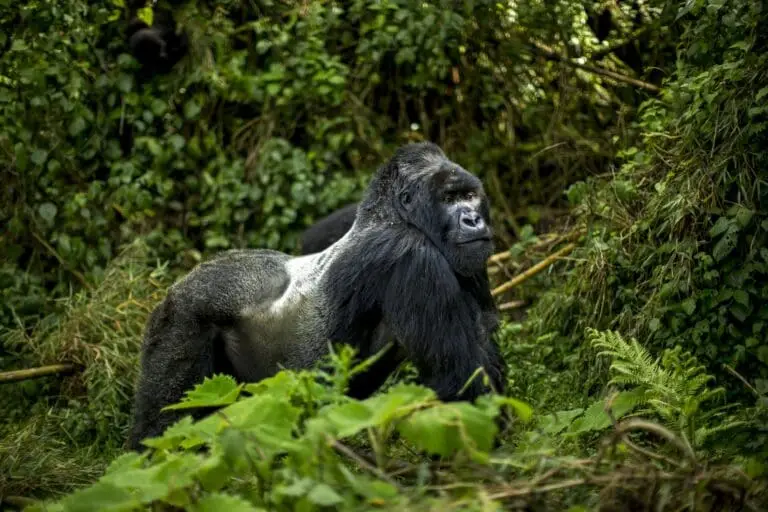
Seven meters, and what to do when they come closer
You must stay at least 7 meters from the gorillas. The families you meet are used to people, but they are wild, and the gorillas decide how close they come. When they walk toward you, the park guide tells you to step back or step aside so they can pass. Do not walk forward to fill the gap.
If a gorilla, usually a baby, touches you, stay still and do not touch it back. Touching a gorilla is not allowed. You may look at a gorilla, but do not hold a long look. If one charges, look away, step back and do not run.
The distance in Uganda is 10 meters, so do not mix the two numbers when you compare countries. We set them side by side in Rwanda or Uganda, side by side.
Masks, coughs and staying well
You wear a face mask whenever you are with the gorillas, and the park provides it. The park guide hands the masks out near the end of the walk, just before the viewing starts, so you do not need to bring your own. If you need to sneeze or cough, turn away from the gorillas. The mask helps, and turning away helps more.
The question guests ask most is whether a cold rules them out. The park advises you not to trek if you are unwell, and nobody is tested at the park. The decision is yours: a mild cold is covered by the mask, and a guest who is unwell can take medication and still trek or hire the stretcher. We do not advise trekking when you are sick, and the permit is non-refundable if you do not go. Travel insurance is advisable, as our safety guide explains, and the booking policy lays out our own terms.
A charge is almost always aimed at another gorilla.
In my experience a charge is almost always aimed at another gorilla, not at a guest. What matters is that you look away, step back and stay put.
The rules keep everyone safe.
I do not know of a case where a guest broke a rule. I believe guests follow them because the rules are there for their safety and the gorillas’.
Let the park guide lead.
In the forest you hike with the park’s official guide, who briefs you from the office to the trail to the visit. We brief you before the day and file your form with the park.
Read more about EricEric Sabi, Founder and RDB-licensed guide
One hour, eight people, no flash
Each gorilla family is visited by one group of no more than 8 visitors a day, and you spend 1 hour with the family. The park guide knows when the hour starts and tells the group when it is over. The park has 24 gorilla families, and 12 of them are visited by guests every day.
Photography is easy to get right. There is no flash, and you do not need a telephoto lens, because you are close enough. Videos are allowed. Eating near the gorillas is not allowed, so snacks wait until after your hour with them. Smoking is not allowed either. Our packing guide covers the camera rain cover and the rest of the kit.
Quiet, clean and careful on the trail
Keep your voice low, do not point at the gorillas and avoid sudden movements.
Whatever you bring in, you carry out. Keep your rubbish in your backpack, and do not leave anything in the forest or take anything from it. There are no proper toilets in the forest, so if you need a break you use the bush. The park guide will tell you when and where. You can read what else to expect in our preparation guide.
Gorilla trekking rules in Rwanda at a glance
The table below puts every rule on one page, with the number or instruction and the reason behind it.
| Rule | The number or instruction | Why it exists |
|---|---|---|
| Distance | At least 7 meters; step back or aside if they come closer | Keeps people and gorillas safe |
| Group size | No more than 8 visitors per family per day | Limits disturbance to the family |
| Time with the gorillas | 1 hour, started and ended by the park guide | Keeps the visit short and calm |
| Minimum age | 15 years; no upper limit | The trek is steep, muddy and at altitude |
| Masks | Worn with the gorillas; the park provides them | Limits human illness reaching the gorillas |
| Coughs and sneezes | Turn away from the gorillas | Limits human illness reaching the gorillas |
| Touching | Never touch a gorilla, and do not touch back if a baby touches you | Keeps contact to the gorillas’ choice |
| Voice and movement | Low voice, no pointing, no sudden movements | Keeps the family relaxed |
| Photography | No flash; videos allowed | Protects the gorillas’ eyes and calm |
| Eating and smoking | Not allowed near the gorillas; no smoking | Keeps food and smoke away from the gorillas |
| Rubbish | Carry it out in your backpack; take nothing from the forest | Keeps the forest as it is |
Gorilla trekking age limit in Rwanda: 15 and over
The minimum age for gorilla trekking in Rwanda is 15, and your passport is checked at the park office on the morning of the trek. There is no upper age limit. A guest in their seventies can trek if they are fit enough, and the walk and altitude are the real test, not the birth year. The permit costs US$1,500 at every age, with no child rate (see Rwanda safari cost).
For a group with teenagers of 15 and over, plan for the same steep, muddy trail as the adults. Our family luxury Rwanda safaris are built around that, and how hard the walk is explains the climb. Children under 15 can enjoy other parts of a Rwanda trip, such as Akagera or Lake Kivu, while older guests trek.
Who leads the group
Hope Tours Africa does not guide you in the forest. We brief you before the trek, send the packing list and file your health and age form with the park the evening before. In the forest the park’s official guide leads the group from the office to the trail and on to the visit, and briefs you at each stage. An armed park ranger walks with you for protection.
Do what the park guide says, and the day goes well. If you want us to plan the whole trip around the trek, start with our Rwanda gorilla safaris, the Rwanda luxury safaris or our wider Rwanda safari packages. The complete trek guide gathers everything in one place.
Questions guests ask
More short answers are in our Rwanda gorilla trekking FAQs.
No. You stay at least 7 meters from the gorillas, and the park guide will tell you to step back if the family moves toward you. The gorillas sometimes come closer on their own, and the rule is about what you do: stay still or step aside and let them pass. The trek day is described step by step.
Yes, whenever you are with the gorillas. The park provides the mask, and the park guide hands it out near the end of the walk, so you do not need to bring your own. If you cough or sneeze, turn away from the gorillas. The full kit list for the day is in our packing guide.
The park advises you not to trek if you are unwell, and nobody is tested at the park, so the choice is yours. A mild cold is covered by the mask, and a guest who is unwell can take medication and still trek or hire the stretcher. The permit is non-refundable, so take travel insurance. See how to book a permit.
No. The minimum age is 15 and there is no upper limit. Fitness matters more than age, because the trail is steep, muddy and at altitude. Guests in their seventies and eighties trek with porters and a walking stick. Tell us your group’s ages early, and read how hard the trek is.
Videos are allowed, and flash is not. Smoking is not allowed, and neither is eating near the gorillas, so keep snacks for after the hour with the gorillas. You do not need a telephoto lens because you are close enough, but a rain cover for the camera is worth packing. Our packing guide lists the camera kit.
Look away, step back and do not run. In my experience a charge is almost always aimed at another gorilla, not at a guest, and the park guide and the armed ranger are with you. The guide tells you what to do before you enter the forest. See the safety guide for the wider picture.
Related guides
Three guides to read next: how hard the walk is, how to book the permit and what to pack.
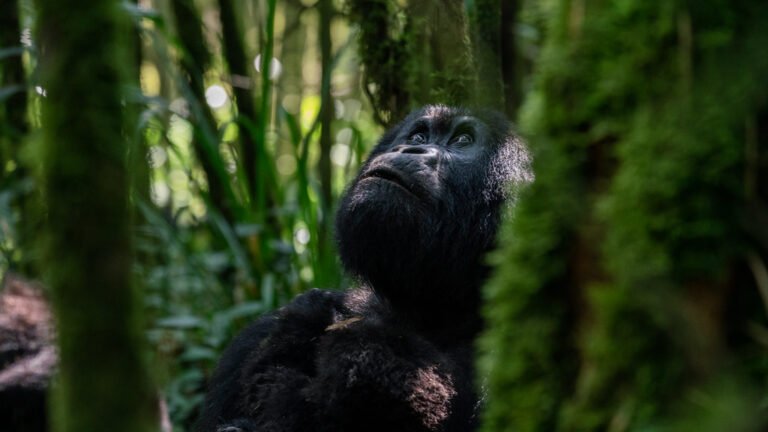 DifficultyHow Difficult Is Gorilla Trekking in Rwanda?How hard the walk is, and what helps if it is too much.
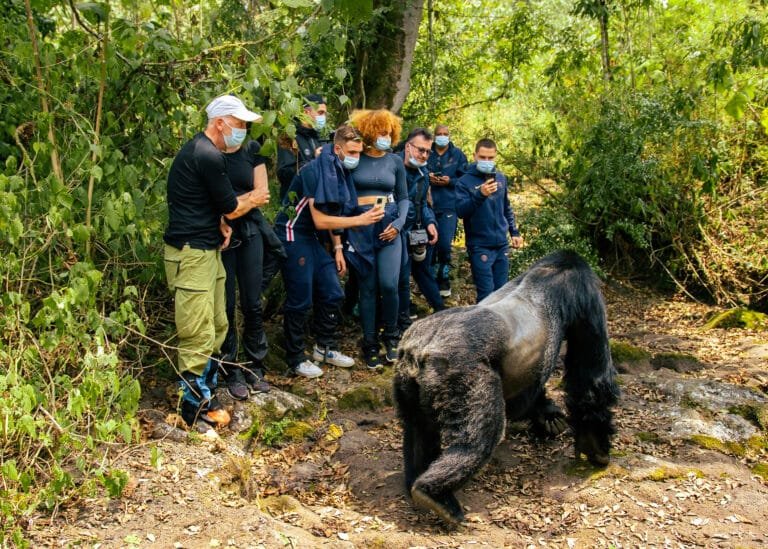 BookingHow to Book a Rwanda Gorilla Trekking PermitSix steps from choosing a date to a confirmed permit.
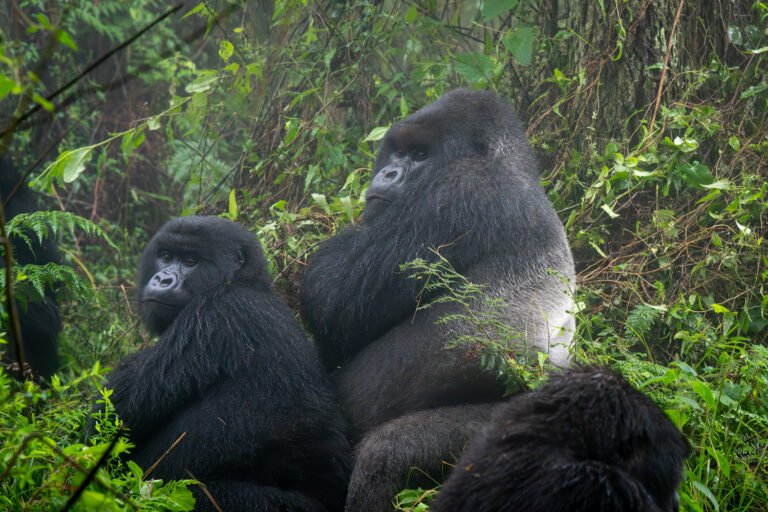 PackingWhat to Pack for Gorilla Trekking in RwandaWhat to wear and carry on trek day, and what to leave behind.
Speak with a safari specialist about your trek
Tell us your dates and how many are travelling, and we will plan the trek day around you. You can also reach us on WhatsApp, by email or on +250 788 602 524.


