
Is Gorilla Trekking in Rwanda Safe?
A Rwandan guide on the real risks, the health rules and what to check before you book.
The short answer
Yes. In my experience gorilla trekking in Rwanda is very safe. The gorilla families are habituated, groups are limited to 8 people, and rangers and trackers lead every trek. The real risks are slippery trails, altitude and illness, not the gorillas. Government travel advice changes, so check your own before you book.
Written by Eric Sabi, Founder and RDB-licensed guide · Updated October 2026
How safe is a gorilla trek, really?
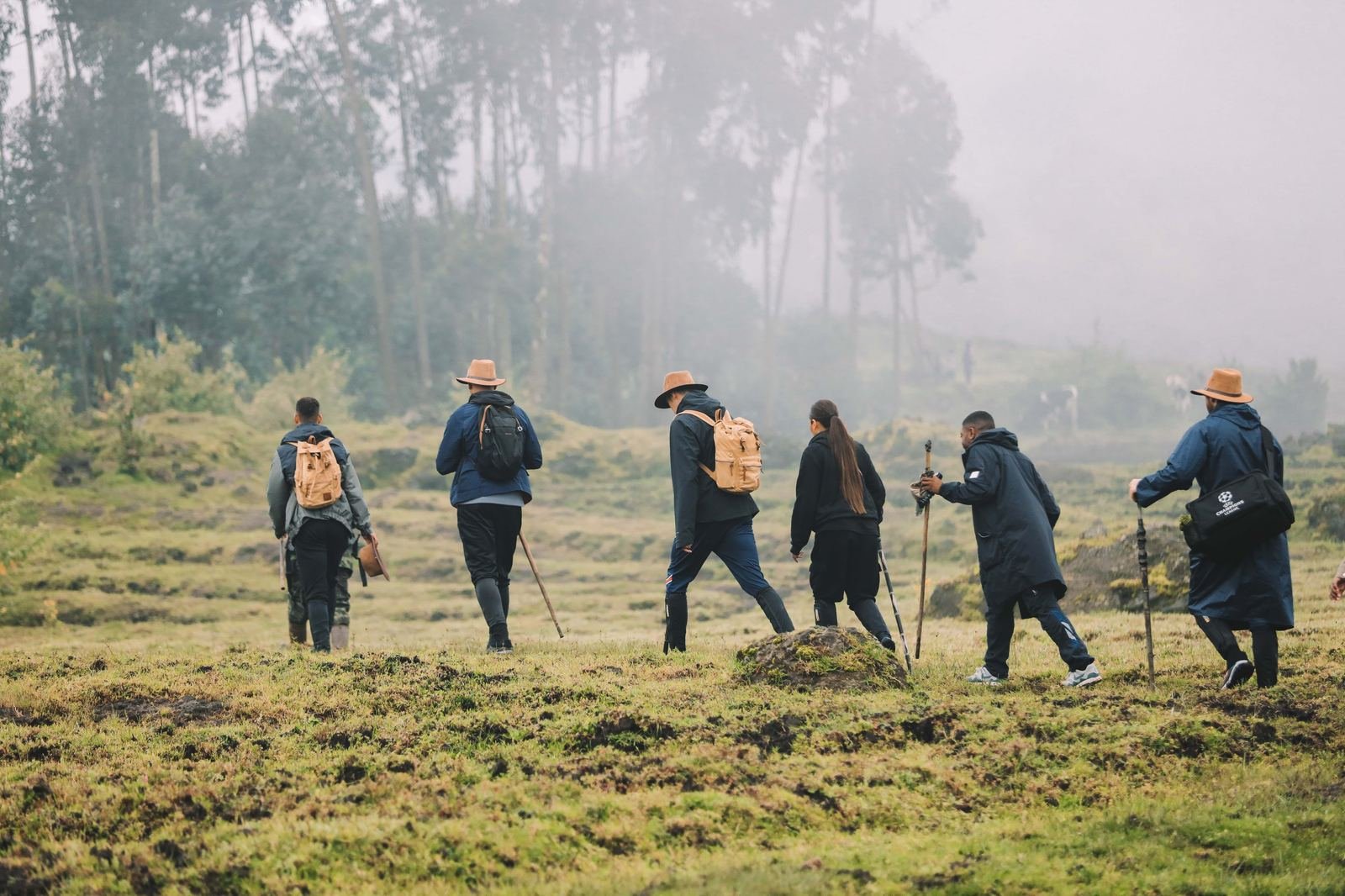
A gorilla trek is a guided walk, and the structure around it does most of the work of keeping you safe. The families you visit are habituated, which means they are used to calm human presence. Each group is limited to 8 visitors, you spend 1 hour with the gorillas, and you stay at least 7 meters away. Rangers and trackers lead every trek, and the trackers find the family before you set out.
The rules that protect people most are the distance, staying still if the gorillas come to you, and doing what your guide says. Our guide to the gorilla trekking rules in Rwanda has the full list, and what happens during gorilla trekking in Rwanda walks through the morning briefing.
Safe does not mean nothing can happen. Gorillas are wild, and the mountain is steep, muddy and high. In my years guiding I have never heard of a gorilla hurting a visitor, but that is my experience, not a statistic. What goes wrong most often is ordinary: a slip in the mud, the effect of altitude and, now and then, nettles. All gorilla trekking in Rwanda takes place in Volcanoes National Park, and treks start at 2,300 to 2,600 meters above sea level. Bwindi in Uganda is a different forest and, in my experience, a harder trek; see our comparison of Rwanda and Uganda gorilla trekking.
If you are weighing up a trek, our gorilla trekking Rwanda tours page shows the trips we plan around it.
What can actually go wrong
The table below sets out what can go wrong on a gorilla trek, what it looks like on the mountain and what reduces it. The first three rows are what goes wrong most often, in my experience: slips, altitude and nettles. How hard your day is depends on where your family slept and how it has moved, so no family is permanently easy or hard. Our guide to how difficult gorilla trekking in Rwanda is explains how that works.
| Risk | What it looks like on the mountain | What reduces it |
|---|---|---|
| Slips and mud | Wet, slippery ground on steep forest trails, mostly in the rainy months of March to May and October to November | Hiking boots, gaiters and a rain jacket, the walking stick handed out at the trailhead, and a porter |
| Altitude and effort | The trek starts at 2,300 to 2,600 meters above sea level, and the climb is harder for anyone not used to it, most of all older guests | Go at your own pace, hire a porter, tell us your health beforehand, or ask about the stretcher |
| Stinging nettles | Nettles in the forest can sting bare skin. In my experience it is a small problem | Long sleeves, long trousers, gaiters and garden gloves |
| Weather | Rain or mist can arrive in any month, and it can rain in the dry season | A rain jacket, and no promise of dry conditions from us in any month |
| A gorilla comes close | Habituated gorillas sometimes walk toward the group, and a juvenile may touch your shoes or trousers | Stay at least 7 meters away, stay still if they approach, and do what your guide says |
| Illness | A cold or stomach bug on the morning of the trek. Masks are worn with the gorillas to avoid transmitting illness | Do not trek if you are unwell, wear the mask with the gorillas, and carry travel insurance |
| Injury or exhaustion | A trek lasts 2 to 8 hours up and back, so tiredness or a fall can happen a long way from the trailhead | Porters, a stretcher carry for US$200 per guest, doctors at the park office, and insurance that covers medical costs |
The kit that answers most of these rows is in our gorilla trekking packing guide. Porters are local community members, hiring one is optional, and I recommend one in every season. Our guide to the best time for gorilla trekking covers the seasons month by month. Once safety is settled, the next question is usually value, and whether gorilla trekking in Rwanda is worth it has an honest answer.
Can a gorilla hurt you?
In my years guiding I have never heard of a gorilla hurting a visitor. I would still not call any wild animal harmless, and I would rather tell you what the day looks like than promise that nothing will happen.
What surprises guests most is how close the gorillas come. Sometimes a gorilla walks toward the group, and a juvenile may touch your shoes or trousers. If they come to you, you do not run away. You stay still, and the gorilla usually moves on.
If a gorilla comes toward the group in a way that worries you, your guide tells you what to do. It may be to step back, stand still or look away, and he knows that family. Do what he says, because he reads that family and you cannot. The briefing before you start covers this, and our gorilla trekking in Rwanda guide describes the whole morning.
Staying healthy, for you and for the gorillas
You wear a mask while you are with the gorillas, not for the whole hike. The rule exists to avoid transmitting illness, so it protects the gorillas as well as you.
The park advises you not to trek if you feel unwell, and we do not advise it either. There is no testing or scanning at the park, and the decision is yours. A mild cold is covered with a mask. A guest who is unwell can take medication and still trek, or hire the stretcher. If you decide not to trek, the permit is non-refundable once purchased, and the Rwanda safari cost guide explains how the permit works. Our guide to how to book a Rwanda gorilla trekking permit covers dates and booking.
That is why travel insurance matters. We strongly recommend it, because you pay for medical, evacuation and repatriation costs that your insurance does not cover. The terms are in our Booking Policy.
Doctors are at the park office. Tell us your health status before you travel. If you may need oxygen in an emergency, we ask the park office to arrange a doctor to go with you. We never promise a doctor on every trek.
Follow your guide.
If a gorilla comes toward you, the guide tells you what to do: step back, stand still or look away. He knows that family. Do what he says.
What I will not promise.
In my experience seeing the gorillas is close to certain, because the trackers find the families first, but I never call it a guarantee. I cannot promise the trail will be smooth or dry, how the altitude will feel, or that no one will slip in the rain.
The team looks after you.
Everyone goes at their own pace. The guide and the porters look after each guest, and there is no rush.
Read more about EricEric Sabi, Founder and RDB-licensed guide
Who needs extra care
Tell us about your age and health when you ask for a quote. Our guide files a fitness, health and request form with the park the evening before your trek, and we tell the park about age, heart conditions, knees, hip replacements and other health issues. The park assigns your family on the morning, using age, health and the number of consecutive treks. It does its best, but nothing is guaranteed.
Older travelers
Older guests do trek gorillas, with planning. The altitude is the part people forget, so tell us about it early. Porters help on steep trails. If walking is the worry, a team of 8 porters can carry you to the gorillas and back on a stretcher for US$200 per guest, arranged in advance. If standing for the hour is the worry, a portable seat can be arranged with the porters, although it is not a guaranteed inclusion.
Heart, joint and mobility conditions
Heart conditions, bad knees and hip replacements are exactly what the health form is for. If you may need oxygen, we ask the park office to arrange a doctor to go with you.
Teenagers and children
The minimum age for gorilla trekking is 15, and the permit costs the same at every age. Younger children cannot trek. We plan around the ages in your group. See our family luxury Rwanda safaris.
Solo travelers
A solo traveler joins a group of up to 8 for the trek, led by the park’s rangers and trackers like everyone else. Your vehicle, guide and rooms are for your party only, because we do not mix clients.
Do not guess on the day.
If you are unsure whether the trek suits you or someone in your group, ask us before you book. Request a tailor-made itinerary, or see our private Rwanda luxury safari, luxury Rwanda safaris and Rwanda safari packages.
Rwanda right now: what to check before you book
In my experience Rwanda is very safe and tourism is open as normal. Government travel advice changes, so check your own before you book, and write to us if you want to talk it through. Checked 30 October 2026.
For the country as a whole, read our guide to whether Rwanda is safe to visit.
Gorilla trekking safety questions
More answers are in our Rwanda safari and gorilla trekking FAQs.
Related guides
Three guides to read next, as you weigh up a trek.
Speak with a safari specialist about your questions
Tell us your plans and any health concern, and we will plan around them. You can also reach us on WhatsApp, by email or on +250 788 602 524.


