Best Time for Gorilla Trekking in Rwanda: Month by Month
The dry months, what the rain really changes on the mountain, and how early to book, from a guide who grew up beside Volcanoes National Park.
The short answer
The best time for gorilla trekking in Rwanda is June to September, the main dry season, with a shorter dry season from mid-December to February. Trekking runs all year. The international permit is US$1,500 per person, or US$1,050 from November to May with 2 nights in Akagera or Nyungwe. Book 3 to 6 months ahead, earlier for the dry months.
Written by Eric Sabi, Founder and RDB-licensed guide · Updated October 2026
Which months are best for gorilla trekking?
The best months for gorilla trekking in Rwanda are June to September, the main dry season, and mid-December to February, a shorter dry season that is not as dry. The trails in Volcanoes National Park are firmest in June to September, with less mud underfoot. These are also the months when permit dates sell out first. To judge whether the permit is worth it in any month, see whether a gorilla permit is worth US$1,500.
Dry has limits in a rainforest. The trek starts at 2,300 to 2,600 meters above sea level, and mist or a shower can arrive in any month. In my experience it can rain in the dry season, so I never promise the weather. June to September is the season when rain is least likely.
Permits are the real limit. The park issues 96 gorilla permits a day, with 8 visitors per family, and 12 of the park’s 24 gorilla families are visited each day. In the dry months those places go first, which is why the booking advice further down matters. For the trek day itself, read our gorilla trekking in Rwanda guide. For the park, see Volcanoes National Park. If you are also weighing Uganda, our Rwanda vs Uganda gorilla trekking comparison sets the two side by side.

What the rain really changes on the mountain
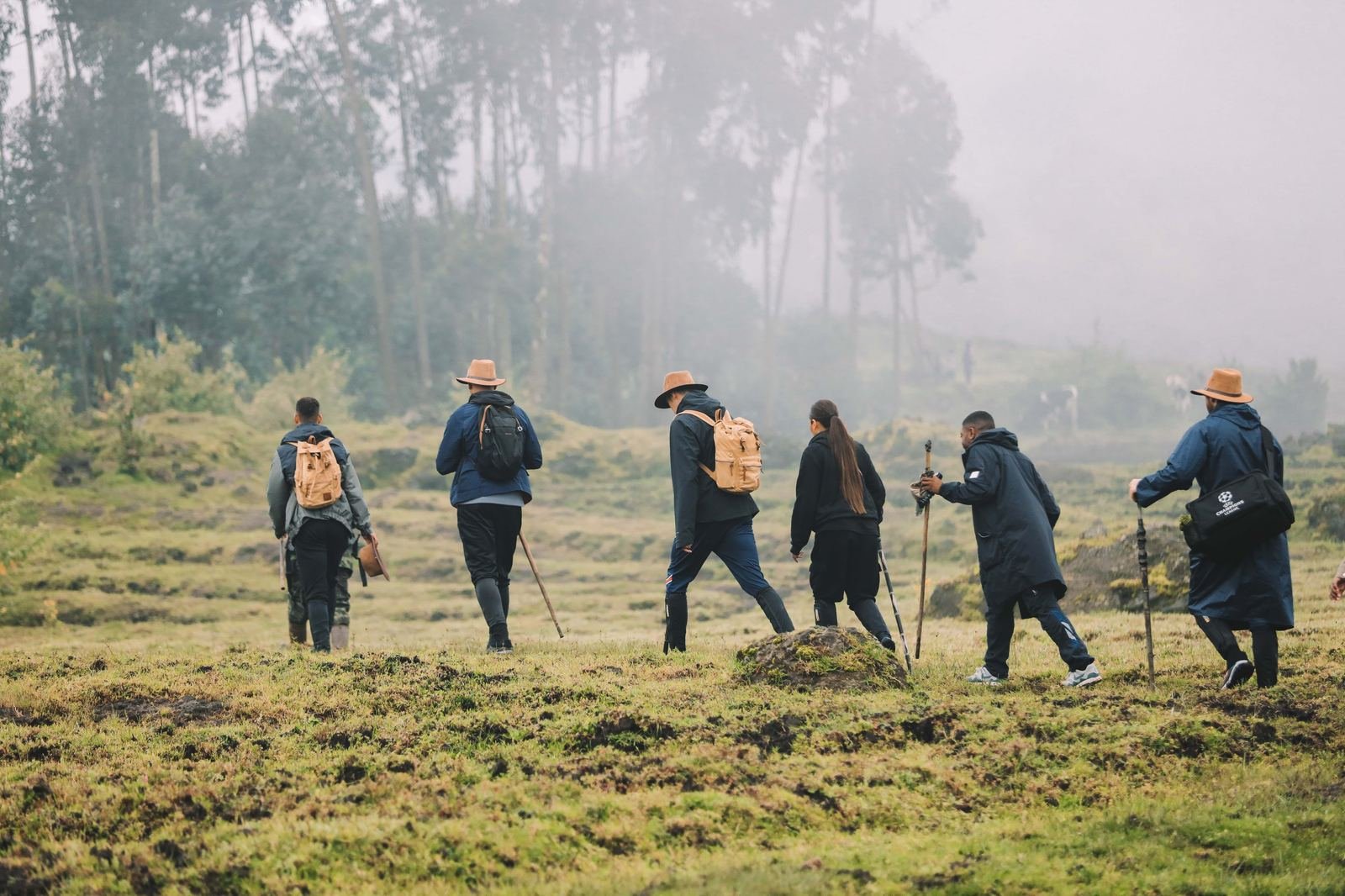
The rain changes the ground, not whether the trek happens. March to May and October to November are the wet months, and gorilla trekking runs in all of them. The forest is greener, and the trails are muddier and slippery in places.
That makes your kit matter more. Gaiters and garden gloves earn their place, along with boots and a rain jacket. A porter is helpful in every season, and more so on steep, muddy trails. Porters are local community members, and hiring one is optional but also a direct way to support the communities around the park. Our gorilla trekking packing guide has the full list. Our checklist on how to prepare for gorilla trekking in Rwanda puts the kit, the papers and the booking in order.
What the rain does not change is the hour with the gorillas. No month gives you a guaranteed short or easy trek. How far you hike depends on where your family slept the night before and how it has moved, and park officials assign the family on the morning. Our guide to how difficult gorilla trekking in Rwanda is explains how that works. For what can go wrong on the trail, see our guide to how safe gorilla trekking in Rwanda is. The day itself, from the park office to the walk down, is in what happens during gorilla trekking in Rwanda.
Month by month at a glance
The table below shows the season, the trails, the international permit price and how far ahead to book for each month. The seasons follow the Rwanda pattern: the main dry season June to September, a shorter dry season from mid-December to February, and wet months March to May and October to November.
| Month | Season | Trails | International permit (US$ per person) | Book ahead (months) |
|---|---|---|---|---|
| January | Short dry season | Firm, less dry than June to September | 1,500, or 1,050 with 2 nights in Akagera or Nyungwe | 3 to 6, earlier |
| February | Short dry season | Firm, less dry than June to September | 1,500, or 1,050 with 2 nights in Akagera or Nyungwe | 3 to 6, earlier |
| March | Wet | Muddier, slippery in places | 1,500, or 1,050 with 2 nights in Akagera or Nyungwe | 3 to 6 |
| April | Wet | Muddier, slippery in places | 1,500, or 1,050 with 2 nights in Akagera or Nyungwe | 3 to 6 |
| May | Wet | Muddier, slippery in places | 1,500, or 1,050 with 2 nights in Akagera or Nyungwe | 3 to 6 |
| June | Main dry season | Firmest | 1,500 | 3 to 6, earlier |
| July | Main dry season | Firmest | 1,500 | 3 to 6, earlier |
| August | Main dry season | Firmest | 1,500 | 3 to 6, earlier |
| September | Main dry season | Firmest | 1,500 | 3 to 6, earlier |
| October | Wet | Muddier, slippery in places | 1,500 | 3 to 6 |
| November | Wet | Muddier, slippery in places | 1,500, or 1,050 with 2 nights in Akagera or Nyungwe | 3 to 6 |
| December | Wet, then short dry season from mid-December | Drier from mid-December | 1,500, or 1,050 with 2 nights in Akagera or Nyungwe | 3 to 6, earlier |
Two stretches stand out. June to September is the longest and driest run, and my first choice for couples. Mid-December to February is a shorter dry season, not as dry, and it sits inside the November to May permit window. Permit rates for other traveler categories are in our Rwanda safari cost guide.
The low-season permit, honestly
From November to May the international gorilla permit is US$1,050 instead of US$1,500, which is 30% less. The condition is that you also stay at least 2 nights in Akagera or Nyungwe. It does not apply from June to October, so October has no discount, and the window opens in November.
The window includes the short dry season from mid-December to February. You can have firm trails and the lower permit on the same trip, though the ground is not as dry as in June to September. Because of the two-night condition, it suits a safari that adds a second park, not a gorilla-only visit.
Our trip prices do not change between seasons. The permit is the only seasonal difference, so do not expect lower trip prices in the wet months.
How the low-season discount works has the detail. To pair the gorillas with a second park, see Akagera National Park, Nyungwe National Park and our Rwanda safari packages.
For what the permit and the trip around it cost in any month, see how much gorilla trekking in Rwanda costs.
How far ahead should you book?
Book 3 to 6 months ahead, and earlier for June to September and mid-December to February. Only 96 permits are issued each day, so dry-season dates go first. Lodges in those months fill early too.
Late bookings sometimes work. We book permits early and watch for cancellations, so we can sometimes find last-minute slots, but it is never guaranteed. On some days the park is completely full.
Permits are non-refundable once purchased. The terms are in our Booking Policy, and how to book a Rwanda gorilla permit walks through the steps. For the whole safari, see the best time for luxury Rwanda safaris and our seasonal guide to Rwanda.

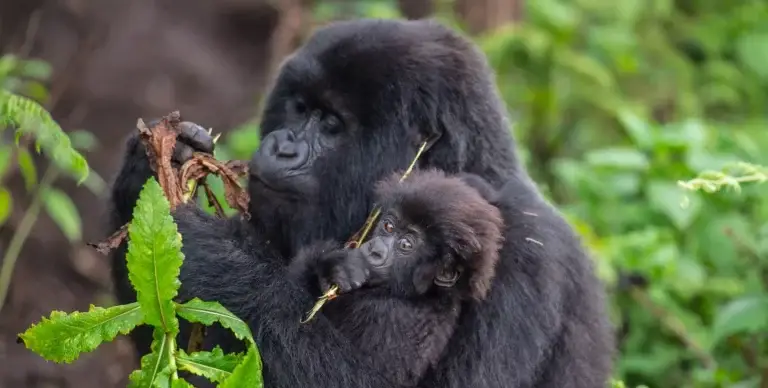
Cancellations are real, and so are full days.
A guest who books in July for an August trek can sometimes still get a permit, because cancellations free up places. I have seen that work even in the busy season. I have also seen days when the park is completely full and no permit can be found, so I never promise it.
Take a porter in every season.
Porters are local community members. On steep or muddy trails they help you find your footing, and hiring one is optional. I recommend one always, not only in the rain, because it is also one way for visitors to support the communities around the park.
My first choice for couples.
June to September, because the trails are less muddy and rain is least likely. Mid-December to February is a shorter dry season, not as dry, and also a good choice.
Read more about EricEric Sabi, Founder and RDB-licensed guide
Which month suits which traveler
Couples
June to September is my first choice for couples, and the shorter dry season from mid-December to February is also a good one. See our luxury Rwanda honeymoon safaris, or our wider luxury Rwanda safaris if you are planning more than the gorillas.
Families
Teenagers can trek in any month. The minimum age is 15, and the permit costs the same at every age. See our family luxury Rwanda safaris. For the full set of trek rules, read our Rwanda gorilla trekking rules.
Gorillas with Akagera
Akagera’s main dry season, June to September, is best for game viewing. Mid-December to February is a shorter dry season, and March to May and October to November are wet. The park is open all year. When we combine the two, we do Akagera first and the gorillas last. See Akagera National Park.
When your dates are fixed
Gorilla trekking runs all year, so the month you can travel is a month you can trek. Pack for mud in the wet months, and use our Rwanda safari packing list for the rest of the bag. A 3 Day Gorilla Trekking Rwanda trip is the simplest way to fit it in, and the 3 Day Luxury Gorilla Trekking Rwanda trip adds a higher lodge level. With only one day, see our 1 day gorilla trek from Kigali. After the trek, a night or two at Lake Kivu suits any season. To see the full set of gorilla trekking trips and pick the one that fits your month, start with our gorilla trekking Rwanda tours.
Gorilla trekking season questions
More answers are in our Rwanda safari and gorilla trekking FAQs.
Related guides
Three guides to read next as you fix your dates.
Speak with a safari specialist about your dates
Tell us when you can travel and we will plan around it. You can also reach us on WhatsApp, by email or on +250 788 602 524.